
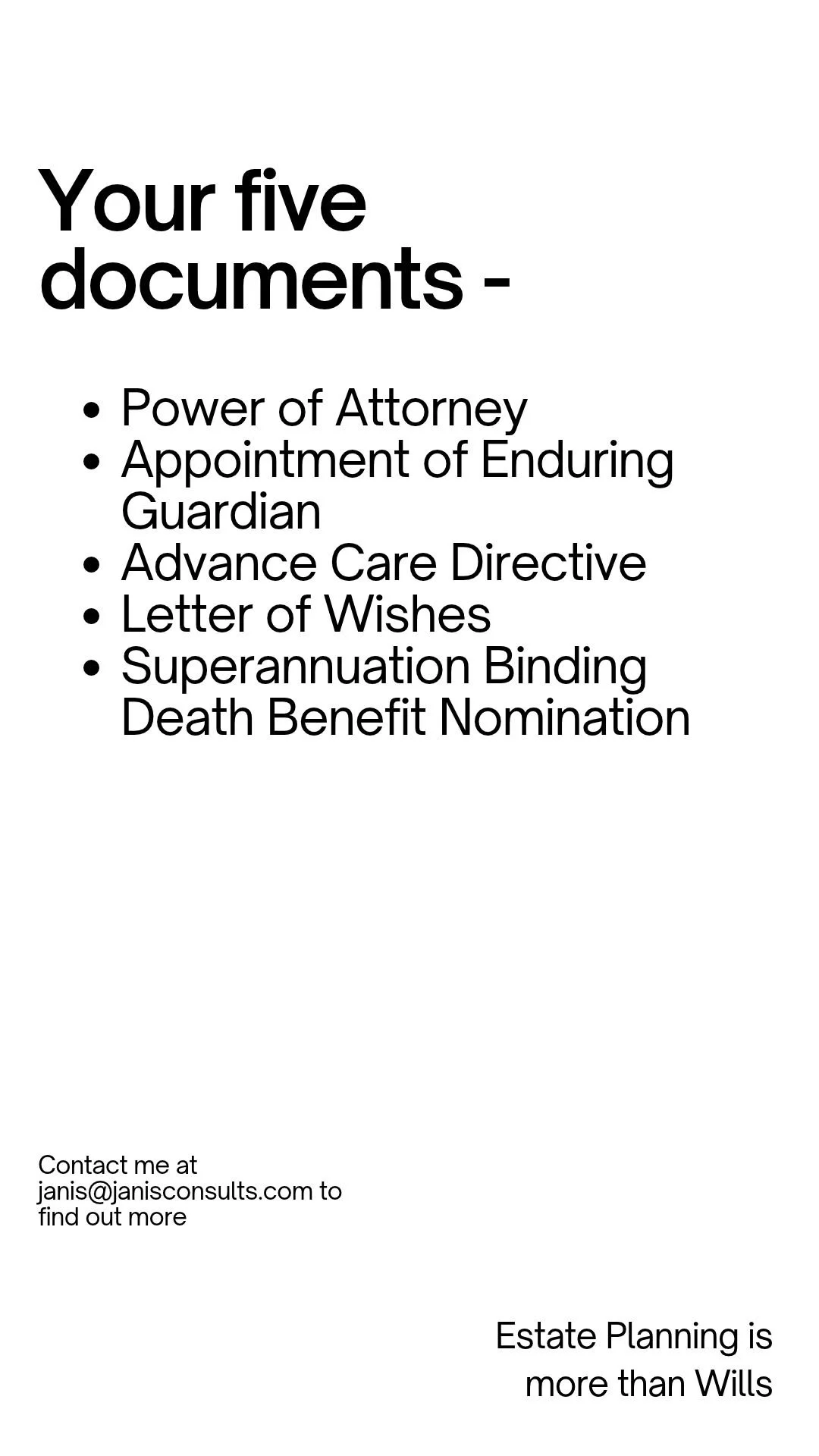
I took a quick holiday from my series on Instagram regarding choices around aging to talk about the five documents that I keep referencing. These are the five documents that you should prepare in a complete estate plan that considers your aged care. As part of that discussion about the five documents I showed a page of my Advance Care Directive precedent for my clients and someone asked me in the comments, what are restrictive practices? Fair question. Sorry, I have lost the comment so I couldn’t respond to that person directly, but I will answer the question here.

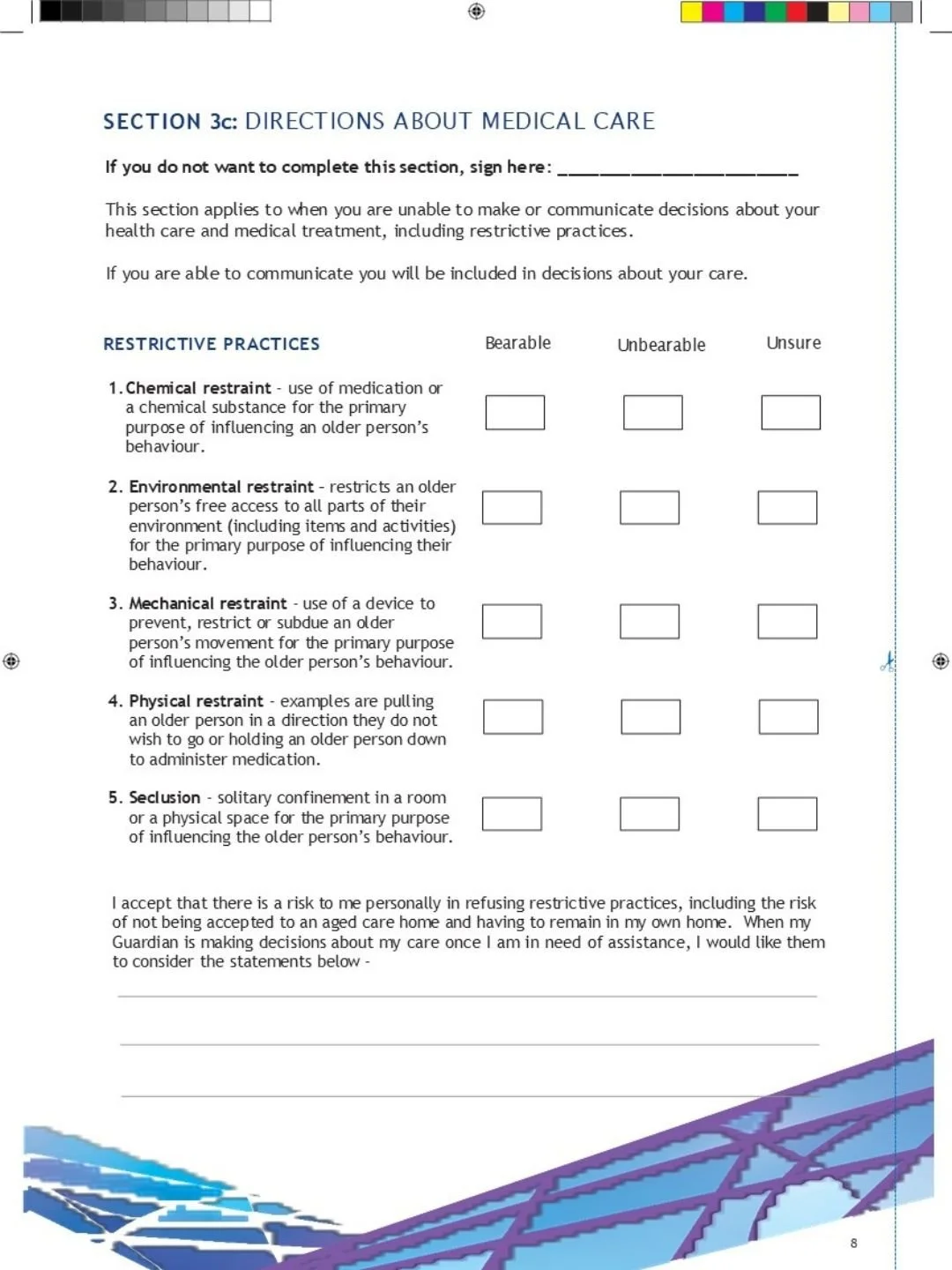
There are five agreed types of restrictive practices. They are -
Chemical restraint - use of medication or a chemical substance for the primary purpose of influencing an older person’s behaviour.
Environmental restraint – restricts an older person’s free access to all parts of their environment (including items and activities) for the primary purpose of influencing their behaviour.
Mechanical restraint - use of a device to prevent, restrict or subdue an older person’s movement for the primary purpose of influencing the older person’s behaviour.
Physical restraint - examples are pulling an older person in a direction they do not wish to go or holding an older person down to administer medication.
Seclusion - solitary confinement in a room or a physical space for the primary purpose of influencing the older person’s behaviour.
Now of course these are all meant to be used as a last resort, and the government likes to focus on using them for things like dementia patients (think locked dementia ward). In reality, most aged care homes have a clause in the agreement going in where you have to agree to restrictive practices, because not allowing you to leave without the permission of your family member is a restrictive practice. If no one has permission to consent or deny consent to restrictive practices then this can trigger a Guardianship Tribunal application, often made not by your family member but by a third party like a hospital employee or an aged care provider.
So what can I do?
I know that you are sick of hearing me say this, but you can create a comprehensive written plan. A simple Appointment of Enduring Guardian is not enough, it is helpful, but it is not enough. Many people in front of the Guardianship Tribunal have that document. Many people in front of the Guardianship Tribunal have family members saying that is definitely not what she wanted. What people in front of the Guardianship Tribunal do not have is -
A comprehensive, written plan that includes what would happen if you could no longer care for yourself (that is, your plan cannot be, leave me alone, stay away, I will look after myself and never lose capacity)
A willingness to ask for help when it is needed, rather than put it off until “later”
I can help you with one part of this. My Letter of Wishes document that walks you through planning for the second half of your retirement is over 40 pages long. Don’t worry, you are not writing for all of those pages. Alot of it is you answering yes or no questions, or plotting your opinion on a graph line. There are also places for you to write out your specific thoughts, but I am not expecting you to complete an essay here. I am asking you to work through this book.
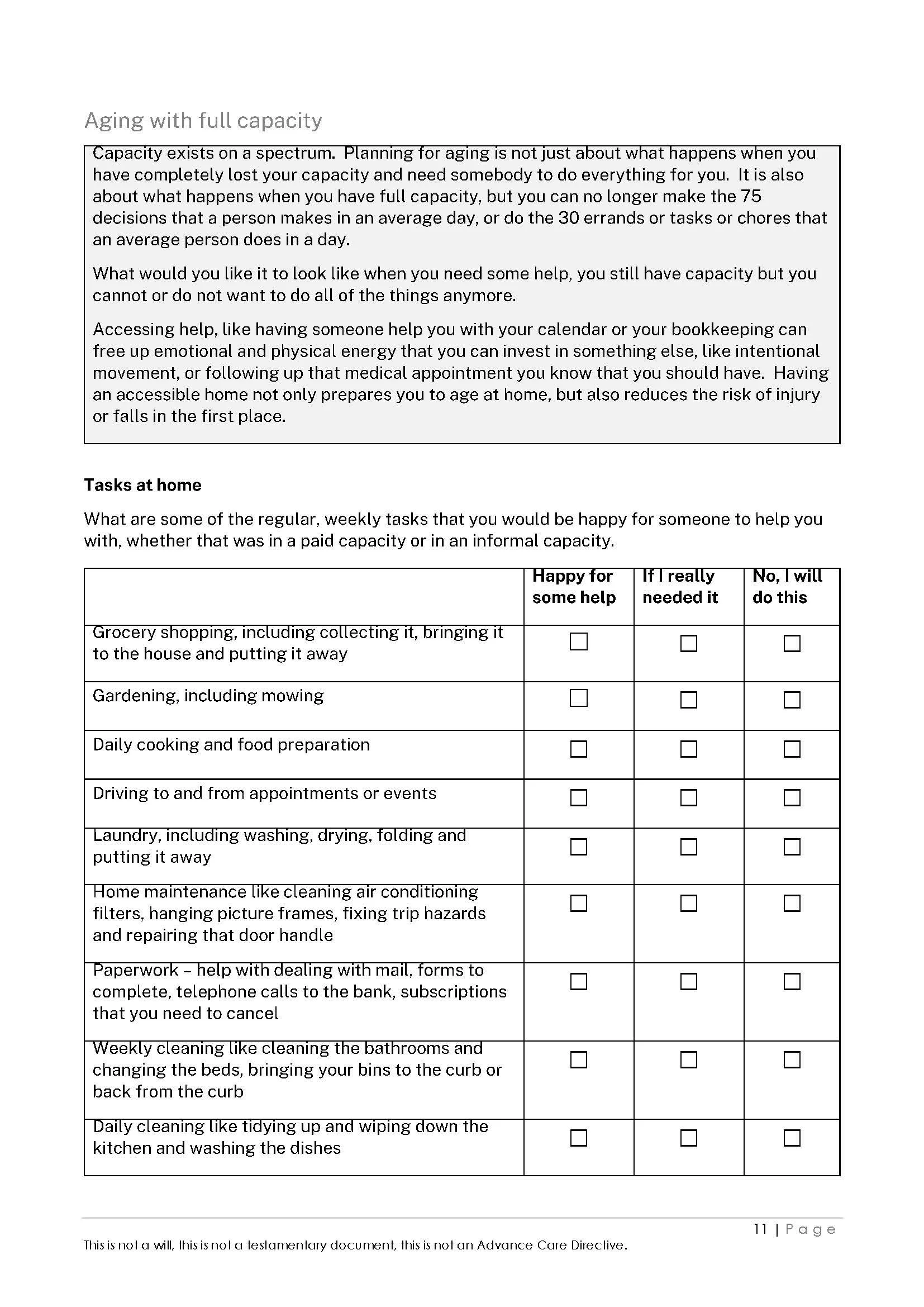
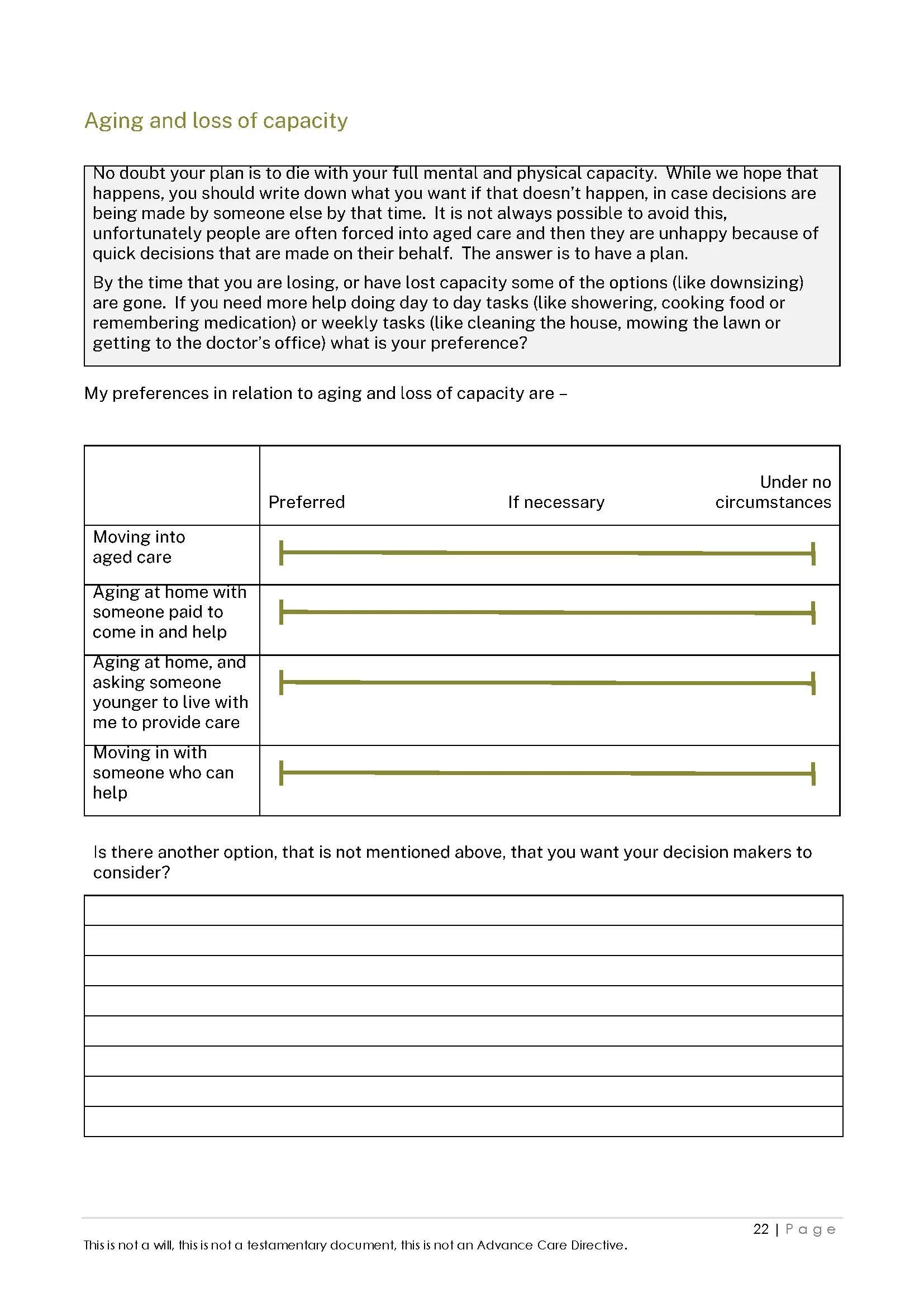
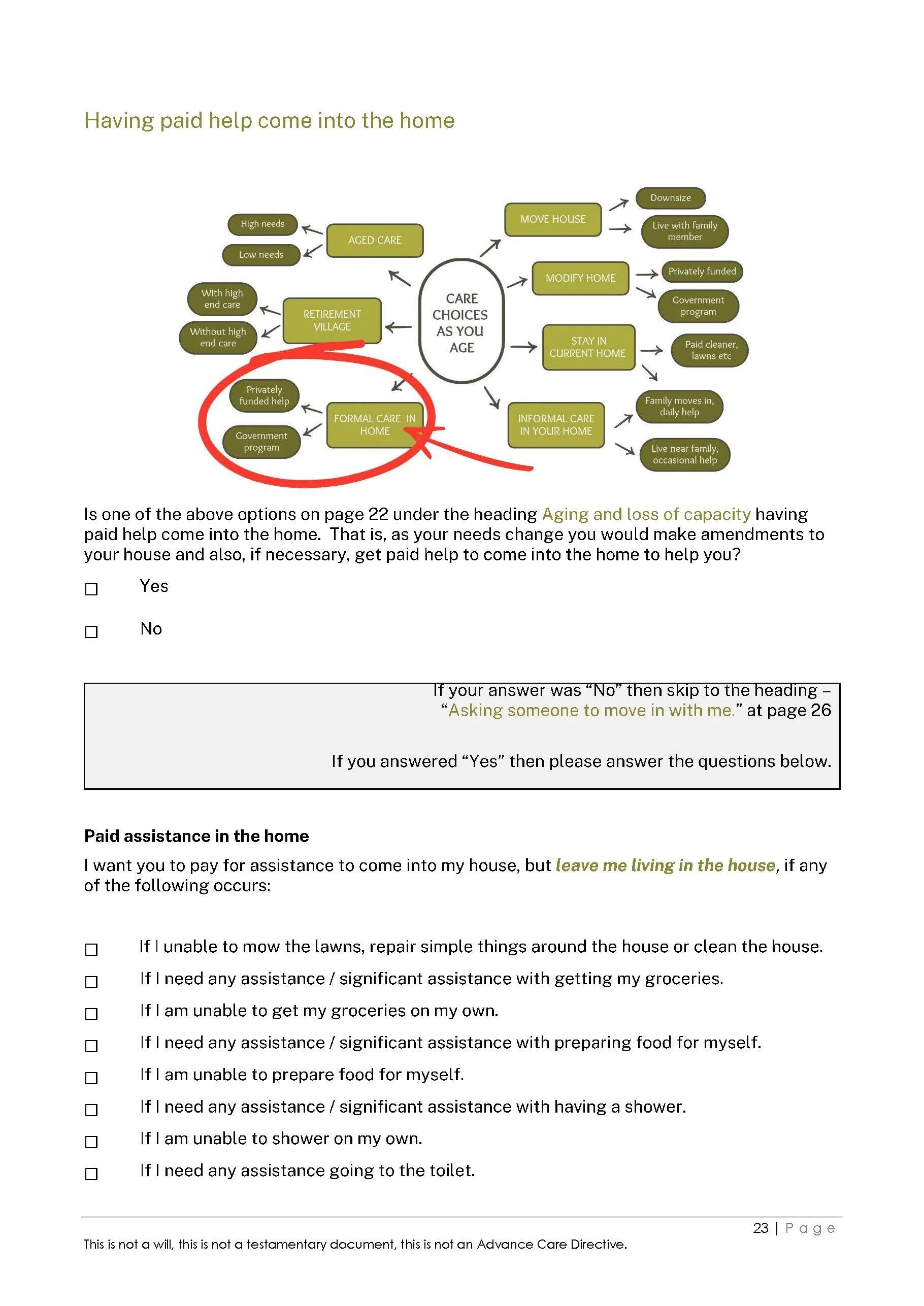
As for the putting it off until later piece, well by and large those who are forced into aged care have refused help, or planning (like downsizing and accessing paid in home care, or moving into a retirement village that is not an aged care home). Later never came. The help that they would agree to is informal and unpaid. This is the situation where I see people forced into aged care or brought before the Guardianship Tribunal time and time again. What I rarely see is people who have structured care in place being forced into a higher level of care. This is why it is important for me to start with planning around what would happen while you still have capacity, as you can see in the first example of my Letter of Wishes precedent above. Accepting help is actually, also a really important way to prolong your capability. I am not a doctor, but I am sure that if you ask your GP about it they would agree with me.
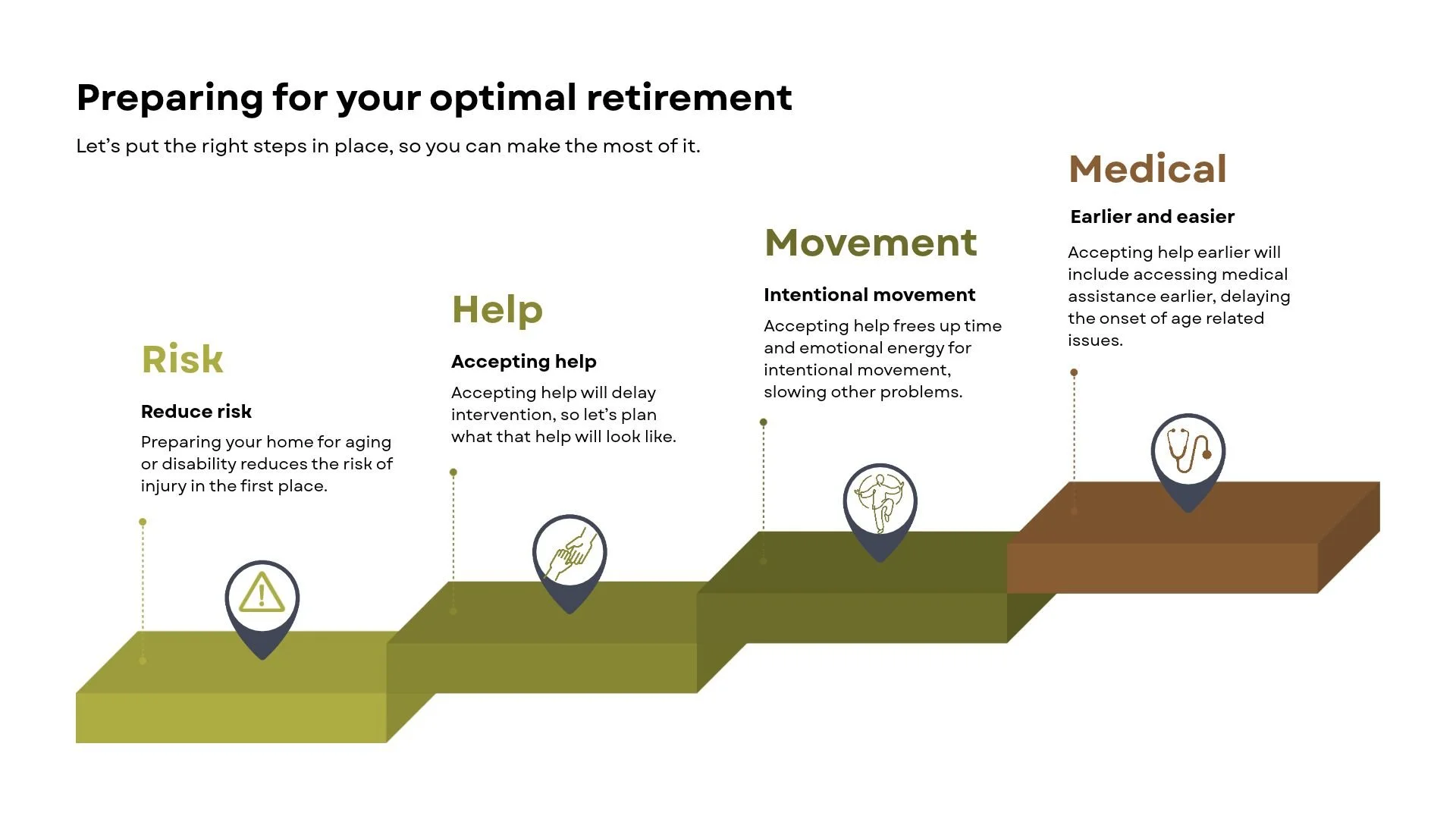
To come back to the original point of this article, what are restrictive practices? Restrictive practices are, quite frankly, what happens once we are losing capacity. Planning for your retirement should include planning to prolong your mental and physical capacity, not just wishing that you would retain your mental and physical capacity. Restrictive practices are of course used as a last resort, particularly in aged care settings. You can read some of the government information on the topic here and here.
The aged care homes also have new requirements in relation to restrictive practices, which is why they now refuse to deal with anyone who does not have the requisite authority in relation to restrictive practices. So if you were my client, our plan in relation to restrictive practices would be to -
Give your medical decision maker the right to consent to (or refuse consent to) restrictive practices in your Appointment of Enduring Guardian document;
Complete the page that you can see above in the Advance Care Directive regarding restrictive practices; and
Complete your Letter of Wishes including your comprehensive plan for the second half of retirement, to try to avoid a situation where your Guardian has to make a decision about restrictive practices.
The documents
When you prepare your Estate Plan with me we will do more than just the basic documents. I do have a package for people who insist that they only want the Power of Attorney and Appointment of Enduring Guardian, but I do not recommend this package. In the “Not Just Death” package we will prepare all of these documents as part of your comprehensive Estate Plan.
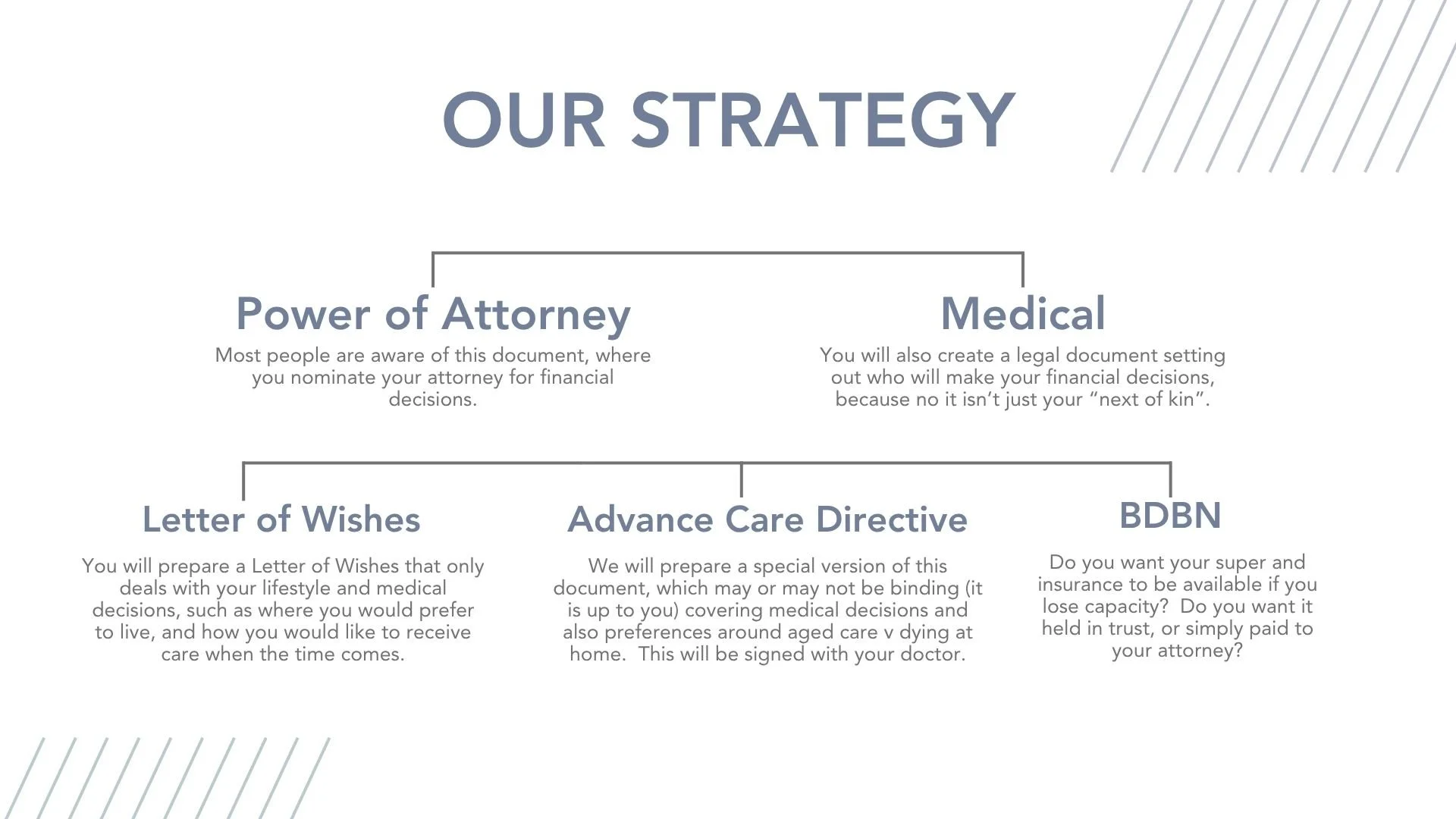
I know that this all seems like a lot, and I want to assure you that we would be working through it together. Also, my documents ask you questions in a way that steps you through the process.
Okay, I am ready to get started
If you are ready to get started on preparing your documents then you can head over to this page about Powers of Attorney to check out the price, and book in your initial consultation.
If you aren’t ready to get started yet then you could join the email list or follow me on social media while you think about it.
